Fire-Killed Trees and Stumps on a Burned Shasta County Lot: What Gets Removed and What Stays
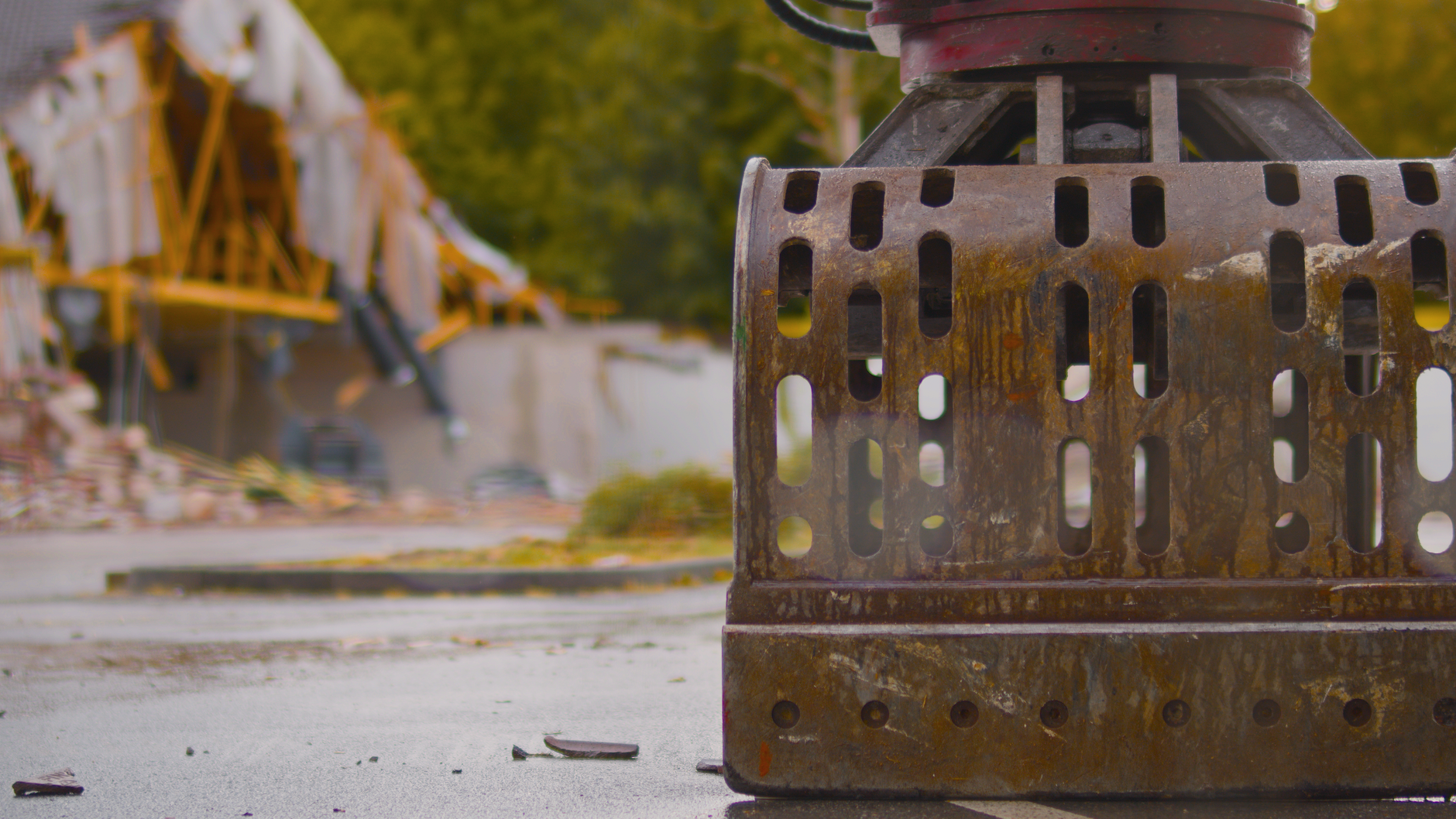
Fire-killed trees on a burned lot in Shasta County, CA come down before the house site is graded, because a dead oak or pine can drop limbs or fall whole onto the machines and onto any new framing. The trees are walked, marked and sorted into three groups: remove now, watch and leave, and cut but keep the stump. The sorting matters as much as the cutting, since a lot near Palo Cedro can hold forty trees and only a handful deserve a chainsaw on day one.
Which burned trees are dangerous enough to take down first
The dangerous ones are the trees that lean toward the house site, the driveway or a neighbor's fence, and any tree with a burned-out trunk base. A trunk charred through on one side can look solid from the road and still be held up by a thin strip of wood. Standing dead pine drops its top first. Oak tends to shed heavy limbs for a season or two after a fire, so the ground under it is treated as a work zone that nobody walks through.
Crews mark the trees with paint before any equipment moves in. A tree within one and a half tree-heights of the building pad is on the first list. Trees along State Route 299, Interstate 5 frontage roads or a shared road are also on that list, because a falling tree there reaches beyond the property line. Lots inside the Carr Fire burn area, west of Redding and toward Whiskeytown Lake, still carry many standing dead trunks.
How do you tell a dead tree from one that will recover
A scratch test on a small branch answers most of the question. Green under the bark means the cambium is alive. Brown or dry means it is not. Oaks in the Sacramento Valley foothills often resprout from the base after a fire, even when the crown looks dead, so a blackened oak with green sprouts at its foot is not removed on the first pass. Conifers do not resprout. A pine with all needles scorched brown and a charred lower trunk is almost always finished.
Arborists look at three things: how much of the trunk circumference is burned, how high the char climbs, and what the crown looks like a few weeks later. Waiting one growing season gives a clearer answer for borderline trees, but only if the tree stands far from anything it could hit.
What equipment does the work
Small trees come down with a chainsaw and a ground crew. Large burned trees need a different approach. A climber may not be able to trust the wood, so the work is done from a lift, or the tree is pushed over by an excavator with a thumb after the base is notched. Once on the ground, the trunk is cut into lengths that a skid steer with a grapple can load.
- Chainsaw and ground crew for trees up to about a foot across
- Bucket lift or crane for tall trees over the house pad
- Excavator with a thumb for pushing, pulling and stacking
- Skid steer with a grapple for loading cut lengths
- Chipper for limbs that are clean enough to chip
Burned wood does not chip like green wood. The charred outside gums up the chipper knives, and the dust is black and fine. Most of it goes to the hauler as cut lengths instead.
What happens to the stumps and roots
Stumps inside the building footprint come out entirely, with the main roots, because a rotting root under a new slab leaves a void. An excavator digs around the stump, cuts the lateral roots with the bucket teeth, and lifts it out in one piece. The hole is backfilled in lifts and compacted, the same as any other fill on the pad.
Stumps outside the footprint are handled differently. On a steep slope near Whiskeytown Lake, pulling every stump can loosen the soil more than the fire already did. In that case the tree is cut low and the stump is left to hold the slope while new plants establish. Roots that have burned underground leave channels that carry water, so a spot with a collapsed stump hole gets probed and filled before winter.
Why burned roots matter for drainage
A burned root system leaves hollow tubes in the soil, and runoff finds them. Water that used to soak in across the slope can run down a root channel and come out as a small gully a few feet downhill. After rain on a burn scar, crews walk the lot looking for sinkholes and fresh cuts. Any soft ground within the building pad gets excavated to firm soil and rebuilt in layers.
How is the wood hauled and where does it go
Burned logs and chunks go to a facility that takes woody waste. Some mills accept burned logs with a clean cut face, and some biomass plants take chipped material. Heavily charred wood usually goes to a landfill or a green waste yard that accepts burn debris. The hauling company gives a ticket for each load, and the tickets are kept with the job file.
Trucks need a place to turn. On rural lots around Shasta County the driveway is often one lane, so the logs are stacked beside the road at a wide spot, where the truck can back in and the loader can reach.
- Cut the trunk into lengths that fit the truck bed.
- Stack the lengths within reach of the loader, off the road shoulder.
- Load the truck, tarp it and weigh it at the facility.
- Keep the weigh ticket with the project record.
Do any trees need a permit to remove
Some do. Oak trees above a certain size are protected under local rules in parts of California, and a tree on a slope or beside a creek can fall under separate protection. A fire-killed oak is often exempt after an arborist confirms it is dead, but the confirmation is needed in writing before the cutting begins. The Shasta County planning office answers that question, and the answer goes into the file next to the debris removal paperwork.
What about smaller brush and the burn layer on the ground
Fire leaves a layer of ash and charcoal across the ground, and under it a thin layer of soil that burned hot enough to repel water. That crust sheds rain instead of absorbing it. The top few inches are raked or scraped on the building pad and on the driveway route, and the material is hauled with the other debris. On the rest of the lot, the layer is usually left in place and covered with straw or mulch so it holds the slope.
Brush and small saplings are cut by hand or by a mower on a skid steer. Roots of small shrubs are left in the ground outside the pad, since they hold soil together.
How long does tree work take on a typical lot
A quarter-acre lot with a dozen burned trees usually takes two to four days for the cutting and one more day for hauling. A heavily wooded lot west of town toward Whiskeytown Lake can take two weeks. Weather matters: wind above twenty miles an hour stops work on tall dead trees, and wet ground can stop the heavy equipment from entering the slope.
Which order the lot work follows
Trees come down before the house debris is hauled if they threaten the house site, and after if they stand clear of it. Stumps come out before grading, so that the grading crew works on a single clean surface. The cleared lot is then walked once more for stray root pieces, nails and wire before the pad is compacted.
Dead trees are the last unpredictable part of a burned lot. Once they are down and the stumps are sorted, every later step, from the foundation to the framing, works on firm and level ground.